







How a Cardiology Clinic Supports Athletes and Active Lifestyles


Staying active is a key part of a healthy lifestyle, but for athletes who train and exert themselves frequently, there is often an added level of demand on the heart. For this reason, it becomes especially important for athletes to understand how the human heart responds to sustained physical stress, and to know the symptoms that may stem from it.
This is where specialised cardiac care becomes relevant. Heart specialists can often support athletes in gaining this understanding through a holistic sports cardiology approach. These doctors are able to carry out targeted screening, detailed evaluation and personalised guidance, allowing athletes to continue pursuing their goals with greater confidence while prioritising both performance and long-term heart health.
What Is Sports Cardiology?
Sports cardiology is a specialised field that focuses on assessing and managing heart health in athletes and physically active individuals. It aims to diagnose, prevent and treat heart conditions that may serve as a potential risk to an athlete.
As the human body adapts to regular, high-intensity training, the heart can undergo natural changes to support increased endurance and performance. A key part of sports cardiology is understanding these adaptations and distinguishing them from signs of underlying cardiovascular conditions. This helps ensure that any concerns are identified early, while allowing athletes to continue training with greater confidence.
Why Do Athletes Need Specialised Cardiac Care?
Athletes place a higher and more consistent demand on their cardiovascular system compared to the general population. While regular exercise is beneficial for heart health, intense and prolonged training can sometimes cause underlying conditions to flare up. Heart specialists are able to advise athletes on training intensity and identify whether excess exertion could be harming their long-term health.
In addition, the effects of heavy exercise on one’s cardiovascular system are often confused with symptoms of heart disease. For example, the strengthening of heart muscles and enlargement of heart chambers could resemble conditions that obstruct blood flow to the heart, causing discomfort and pain. The opposite is also true, where an athlete may dismiss actual symptoms of heart conditions as normal training fatigue or overexertion, thus delaying necessary medical attention.
Without a specialised assessment, it may be difficult to accurately distinguish between normal adaptations and potential healthcare concerns.
This is why a tailored sports cardiology approach is important. Through this specialised form of cardiac care, athletes can better understand their individual risk profile, train more safely and make informed decisions about their performance and long-term health.
Common Heart Conditions Seen in Athletes
Many cardiovascular changes in athletes are normal and beneficial. However, when symptoms overlap with common signs of heart conditions, a specialist assessment is usually necessary to determine whether treatment is required. Chest discomfort, pain and other recurring symptoms could be a sign of several common conditions:
Hypertrophic Cardiomyopathy (HCM)
Hypertrophic cardiomyopathy is a condition where the heart muscle becomes abnormally thick, which can affect blood flow out of the heart. In athletes, this may initially be mistaken for normal muscle strengthening due to training. However, symptoms such as chest pain, shortness of breath or fainting during exercise may indicate the need for further evaluation.
Dilated Cardiomyopathy (DCM)
Dilated cardiomyopathy occurs when the heart chambers become enlarged and the heart muscle weakens, reducing its ability to pump blood effectively. Although some enlargement is expected in well-trained athletes, DCM may present with fatigue, reduced exercise tolerance or breathlessness, particularly during high-intensity exertion.
Cardiac Arrhythmias
Arrhythmias refer to irregular heart rhythms that may cause palpitations, dizziness or fainting. While some rhythm changes are common in athletes, more significant arrhythmias can be triggered or worsened by intense training. If these changes interfere with your physical activities, you may require monitoring or treatment.
Myocarditis
Myocarditis is an inflammation of the heart muscle, often following a viral infection. Continuing intense exercise during or shortly after illness can worsen the condition, leading to chest discomfort, fatigue or abnormal heart rhythms. Early diagnosis is important to prevent complications.
Congenital Heart Conditions
Some athletes may have underlying structural heart abnormalities present from birth. These conditions may not cause symptoms at first, and thus remain undetected for years, but can become more apparent after high levels of physical stress.
How Do Sports Cardiology Clinics Screen Athletes for Heart Health?
Heart screening plays an important role in helping athletes understand their cardiovascular health before, during and after engaging in regular training. Rather than relying on general assessments, sports cardiology clinics adopt a more tailored approach that takes into account an individual’s activity level, training intensity and personal risk factors.
These evaluations are designed to detect underlying conditions early, monitor how the heart adapts to exercise and assist athletes in participating in sports safely.
Medical History and Risk Assessment
Cardiologists often begin with a detailed review of their patients’ personal and family medical history. This includes identifying risk factors such as existing medical conditions, current medications, a family history of heart disease or sudden cardiac events and any previous symptoms like chest pain, palpitations or fainting. Understanding training habits, intensity and frequency also provides important context, helping the specialist assess whether further investigation is needed.
Physical Examination
Physical exams are carried out to assess overall cardiovascular health. Cardiologists often measure a patient’s blood pressure, heart rate and whether they have an irregular heartbeat. The cardiologist may also look for physical signs that could indicate underlying heart conditions, providing a baseline for comparison with further diagnostic tests.
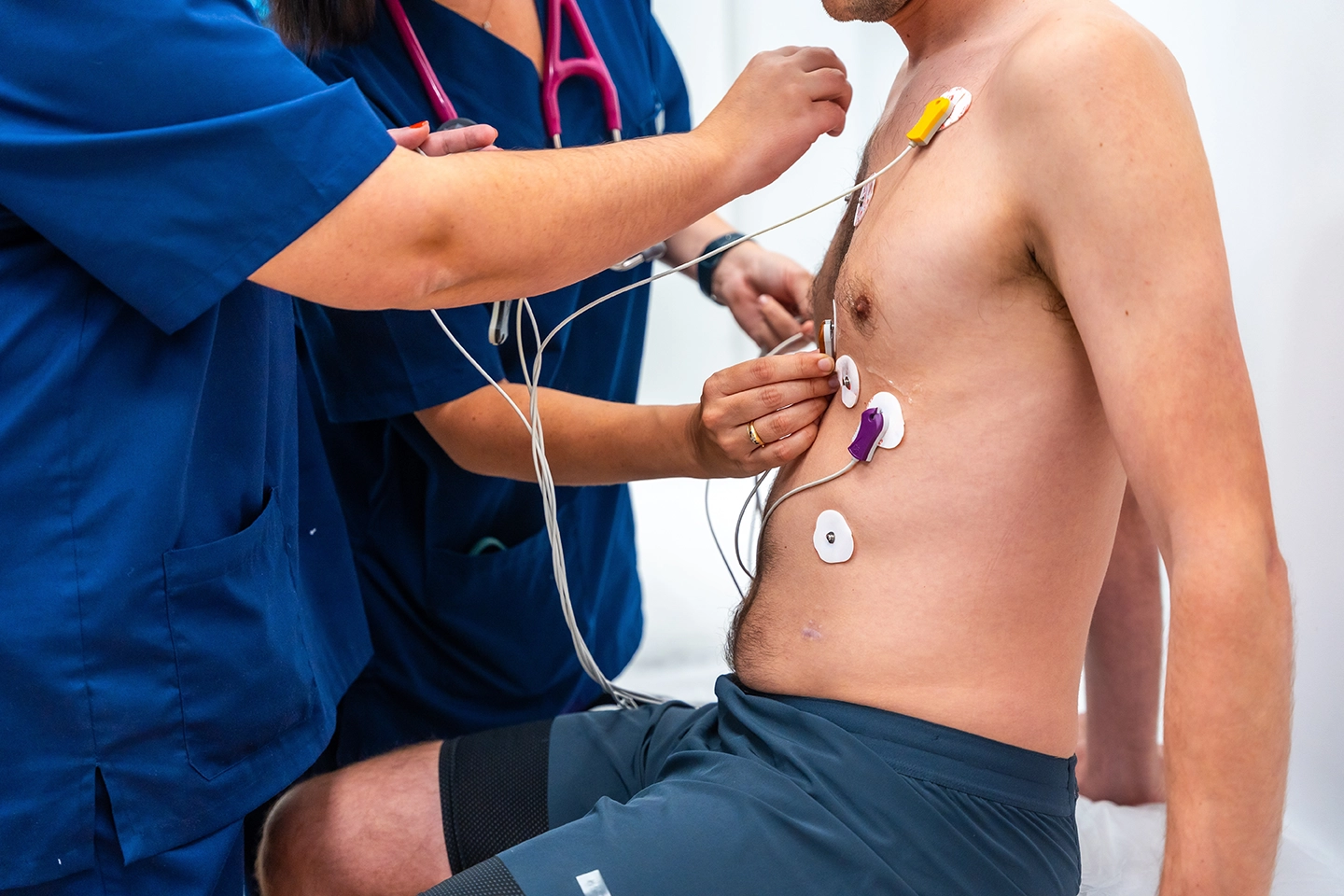
Electrocardiogram (ECG)
An electrocardiogram (ECG) records the electrical activity of the heart and is commonly used as an initial screening tool. It can detect irregular heart rhythms, conduction issues and patterns that may suggest structural heart disease. As athletes often exhibit unique ECG changes due to training, results have to be interpreted carefully by a specialist who can distinguish between normal adaptations and abnormal findings.
Echocardiogram
An echocardiogram uses ultrasound imaging to assess the structure and function of the heart in real time. It allows cardiologists to evaluate the size of the heart chambers, the thickness of the heart muscle and how well the heart is pumping blood. This is particularly useful in differentiating between normal athletic adaptations and conditions such as cardiomyopathy or valve abnormalities.
Exercise Stress Testing
Exercise stress testing evaluates how the heart responds to physical exertion, typically using a treadmill or stationary bike. During the test, heart rate, rhythm, blood pressure and symptoms are monitored under increasing levels of intensity. This helps identify exercise-induced abnormalities that may not be present at rest, as well as assess overall cardiovascular fitness and exercise tolerance.
Through these diagnosis methods, sports cardiologists are often able to identify potential risks early and begin treatment. Addressing these conditions early in development can help guide athletes towards safer, more informed training decisions.
Supporting Your Sports Performance with Heart Specialist Care
When given the right insight into their own cardiovascular health, it becomes easier for athletes to recognise whether heart symptoms are part of normal adaptation, or if they signal a need for further attention. This understanding allows individuals to train with greater clarity and control. Seeking out regular assessment sessions at a dedicated sports cardiology clinic can provide athletes with a valuable sense of direction, especially when they wish to balance their physical performance with long-term wellbeing.
At EH Heart Specialist Clinic, patients receive comprehensive cardiology care for various heart-related concerns. Our Senior Consultant Cardiologist & Internal Medicine Physician, Dr Eric Hong, takes a focused approach to sports cardiology, offering thorough evaluations and practical guidance to support safe and effective training.
If you are looking to better understand your heart health or if you have experienced symptoms during training, contact us today to find out how we may support you.